
 Image 1 of 4
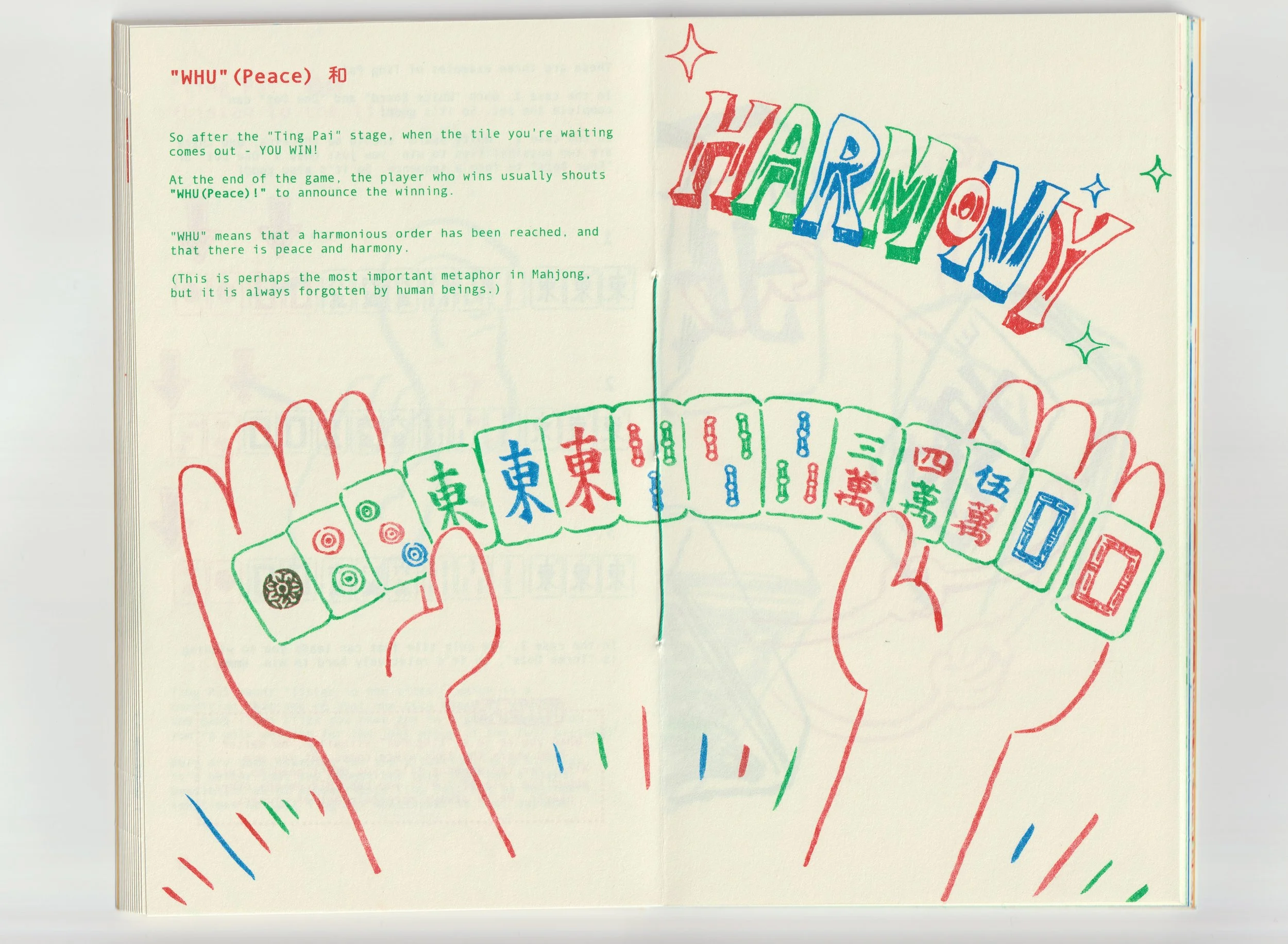 Image 2 of 4
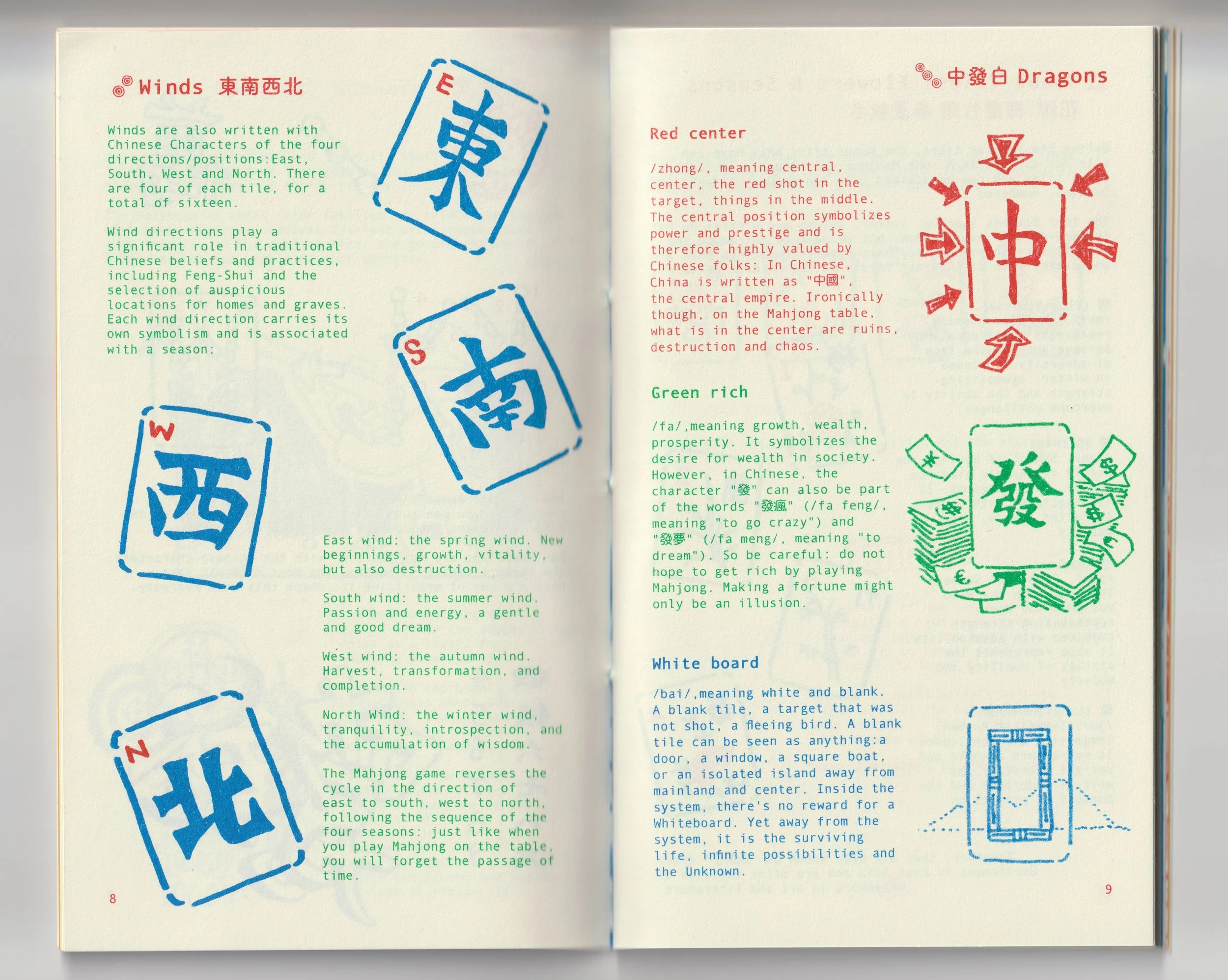 Image 3 of 4
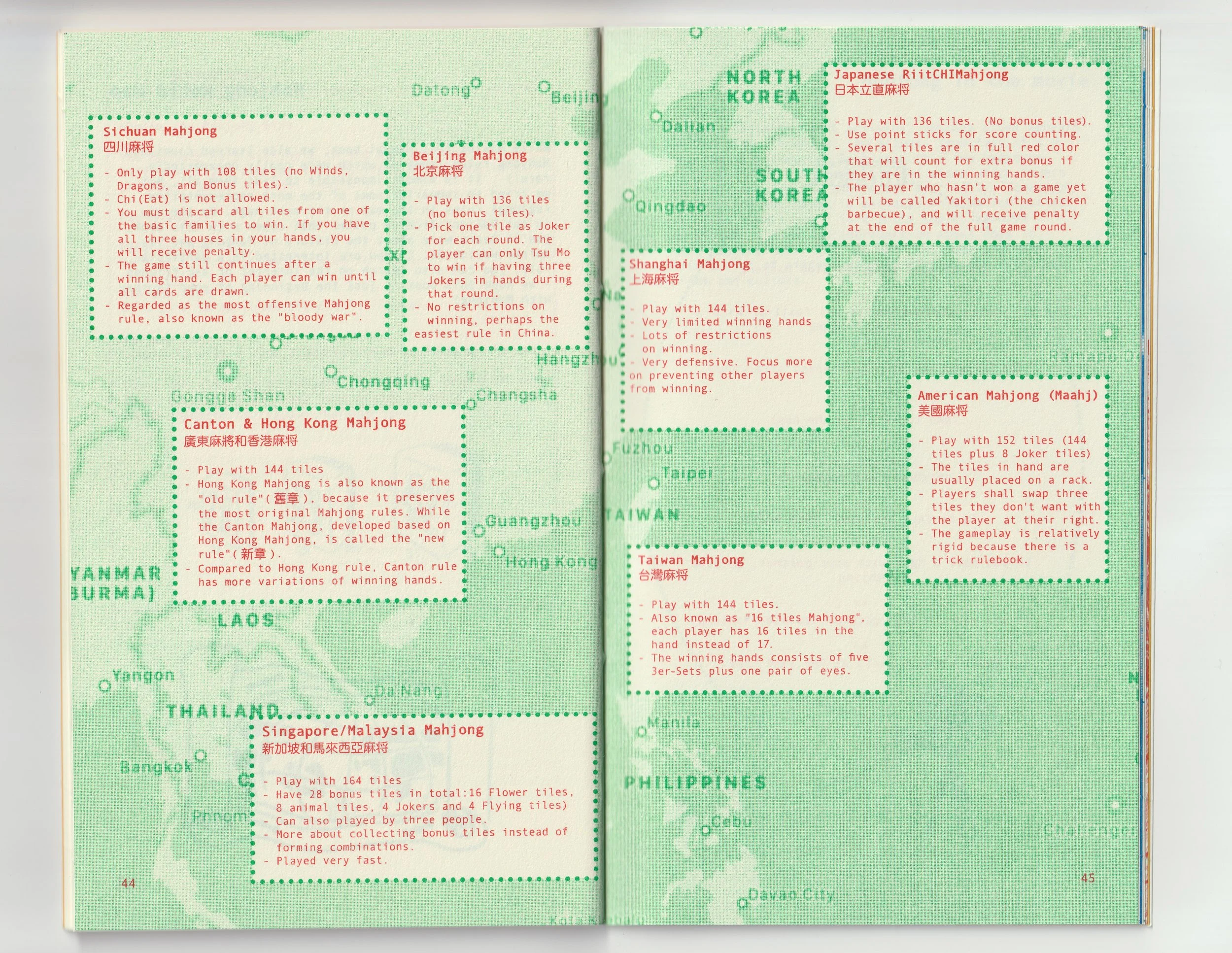 Image 4 of 4
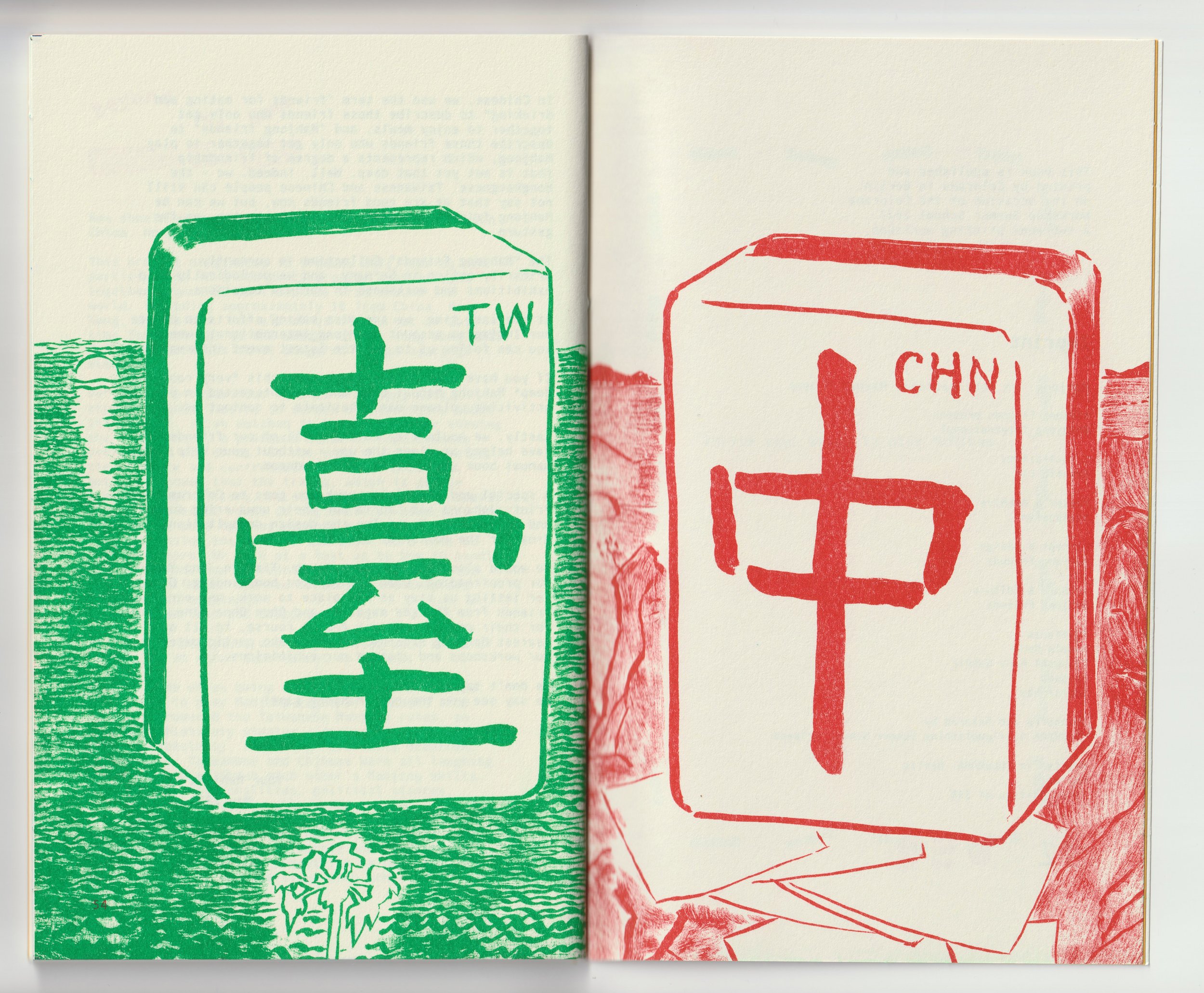
Mahjong is a board game that encapsulates the rich history and cultural traditions of East Asia. Due to the cultural and geographical isolation in the process of Mahjong’s transmission, different countries and regions have their own diverse mahjong rules (e.g. the rules in Taiwan, Hong Kong, various regions of China, Japan, Korea, Malaysia and Singapore etc.), but because all the different rules are relatively easy to interchange, people who know Mahjong - though having different language, cultural and ideological backgrounds - could sit down and play mahjong together: in this case those conflicts, nationalities, political positions, problems, ideologies, struggles - found a common ground. Mahjong thus becomes the situation/place where people meet, communicate, exchange, and make friends.
In the wish to further extend and promote this precious situation, we decided to form a collective „Mahjong Friends“ and started the project with people from different regions. We hope to use mahjong as a means to help more people understand the intricate history and delicate, tense current political situation in East Asia, as the game itself is full of political metaphors. As the first publication of Mahjong Friends, Mahjong: an International Manual introduced the basic Mahjong rules as well as the culture/stories behind the patterns of Mahjong tiles through witty descriptions and vivid illustrations, accomplished with a poster full of Mahjong archive & history, as well as a piece of tiny Mahjong cheating paper, this very cool and deep Mahjong Manual book aims to bring peace to the world.
about nomad papaya books:
Nomad Papaya BOOKS is an art book / zine publishing house focusing on transition of culture(s) and identit(ies), based in Taiwan / Germany.
The founder started questioning the notions of identity & nationality but get really confused by himself, so he decided to make art books and collaborate with people, try (not) to answer and form new ideologies and relations.
What is changing when you cross the border, leaving your own history/home behind?
Can encounter form new Identities ?
Mahjong is a board game that encapsulates the rich history and cultural traditions of East Asia. Due to the cultural and geographical isolation in the process of Mahjong’s transmission, different countries and regions have their own diverse mahjong rules (e.g. the rules in Taiwan, Hong Kong, various regions of China, Japan, Korea, Malaysia and Singapore etc.), but because all the different rules are relatively easy to interchange, people who know Mahjong - though having different language, cultural and ideological backgrounds - could sit down and play mahjong together: in this case those conflicts, nationalities, political positions, problems, ideologies, struggles - found a common ground. Mahjong thus becomes the situation/place where people meet, communicate, exchange, and make friends.
In the wish to further extend and promote this precious situation, we decided to form a collective „Mahjong Friends“ and started the project with people from different regions. We hope to use mahjong as a means to help more people understand the intricate history and delicate, tense current political situation in East Asia, as the game itself is full of political metaphors. As the first publication of Mahjong Friends, Mahjong: an International Manual introduced the basic Mahjong rules as well as the culture/stories behind the patterns of Mahjong tiles through witty descriptions and vivid illustrations, accomplished with a poster full of Mahjong archive & history, as well as a piece of tiny Mahjong cheating paper, this very cool and deep Mahjong Manual book aims to bring peace to the world.
about nomad papaya books:
Nomad Papaya BOOKS is an art book / zine publishing house focusing on transition of culture(s) and identit(ies), based in Taiwan / Germany.
The founder started questioning the notions of identity & nationality but get really confused by himself, so he decided to make art books and collaborate with people, try (not) to answer and form new ideologies and relations.
What is changing when you cross the border, leaving your own history/home behind?
Can encounter form new Identities ?